Primary Program

“We chose Children’s Own School as our preschool because of their accredited Kindergarten program. In addition to academic readiness, our child has developed confidence and independence ahead of entering first grade.”

– Jennifer

Our Primary program is the traditional multi-age Montessori program designed specifically for children 2.9-6 years old.  Children are given sequenced lessons intended to increase their skills and independence. When they complete their kindergarten year, children are ready to enter first grade.

Children freely move between all areas of the classroom which include Practical Life, Sensorial, Mathematics, and Literacy. Art, music and storytelling are incorporated throughout the day. Our school day begins at at 8:30am and ends at 12:00pm or 3:00pm.
Montessori Curriculum

Practical Life

A cornerstone of Montessori education intended to help children develop functional independence, Practical Life activities lay the foundation for all other areas of learning. Focused on everyday activities children may observe at home, such as preparing food or dressing themselves, these familiar tasks help children refine fine and gross motor skills, strengthen eye-hand coordination, improve balance and concentration, and build working memory as they internalize multi-step processes. These activities support independent choice and nurture a child’s growing confidence.
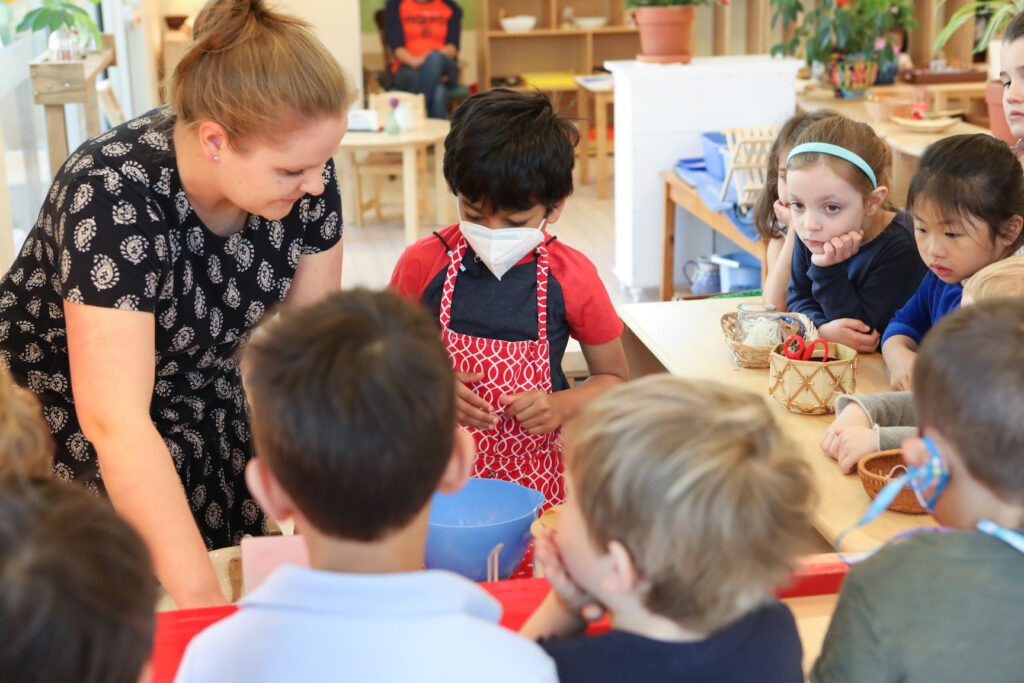
Grace and Courtesy lessons emphasize the importance of respecting ourselves, others, and the classroom environment. Lessons such as greeting others, waiting patiently, and cleaning a table after snack/lunch model social behaviors and expectations and help young children begin to internalize the use of respectful behavior. Teachers model appropriate social  behavior and language and guide children to practice—creating an environment of respect for all.

Sensorial

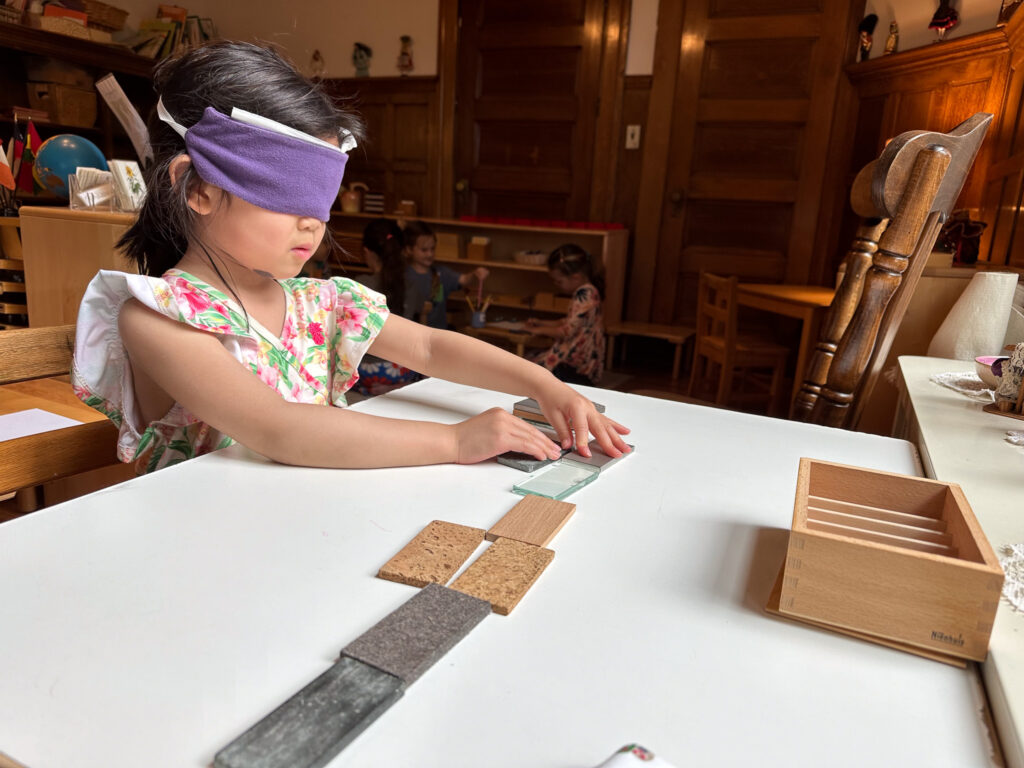
Hands-on exploration of sensorial materials help young children refine their senses to build a foundation for cognitive development through hands-on exploration. These materials isolate specific sensory experiences such as size, shape, texture, and sound to help children learn to observe and classify—building problem-solving skills, better focus, fine motor skills, and a rich vocabulary. The process of comparing, contrasting, and classifying through hands-on learning enhances critical thinking skills and provide a concrete foundation for abstract concepts in math and geometry.

Mathematics

Hands-on, multi-sensory based materials—including beads, chains, counters, and rods—provide a concrete approach to help children deeply understand mathematical concepts before moving to abstract representations. Each child progresses through the curriculum at their own pace building a strong foundation for more advanced work, a growth mindset, critical thinking skills, focus, and self-confidence.

Language

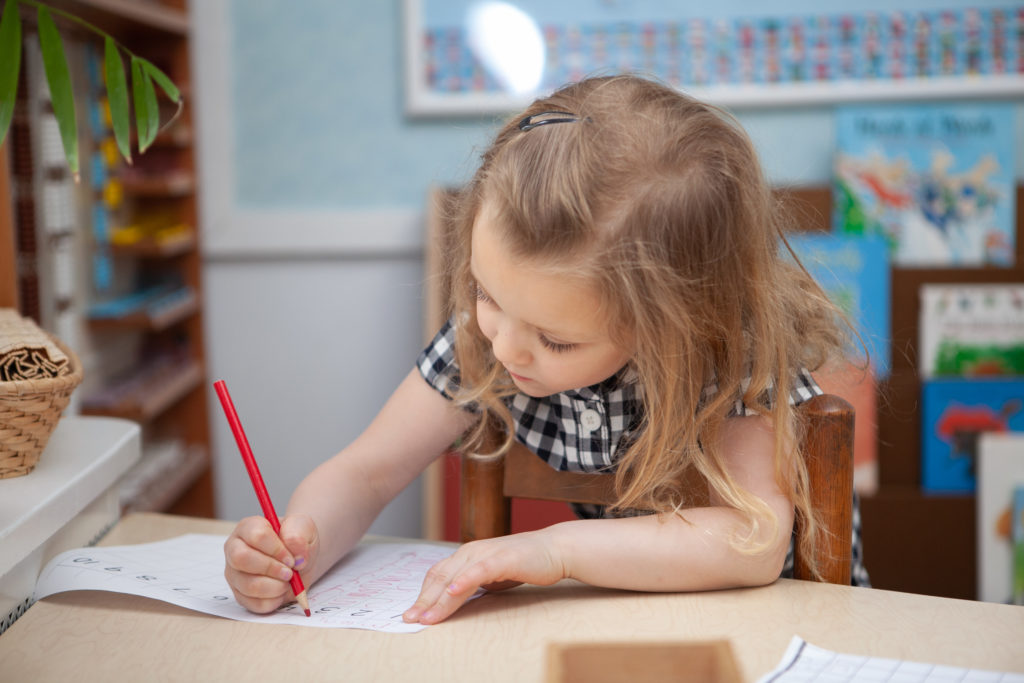
Birth to age 6 is a period of tremendous growth in language development. Here, children are surrounded by rich, dynamic language to support a strong foundation. Children are encouraged to speak and listen in a nurturing environment that builds confidence and self-esteem. Montessori language materials promote the development of oral language skills, vocabulary, phonetic awareness, and early reading and writing skills. In addition to storytelling, singing, poetry, and sound games, the use of tactile materials—such as sandpaper letters and the moveable alphabet—help children master letter shape and sound, connect sound and letter, develop eye-hand coordination, and prepare children for writing. This approach equips children with the essential skills for reading and writing—at their own pace—to cultivate understanding and a lifelong passion for language and literacy.

Music Program

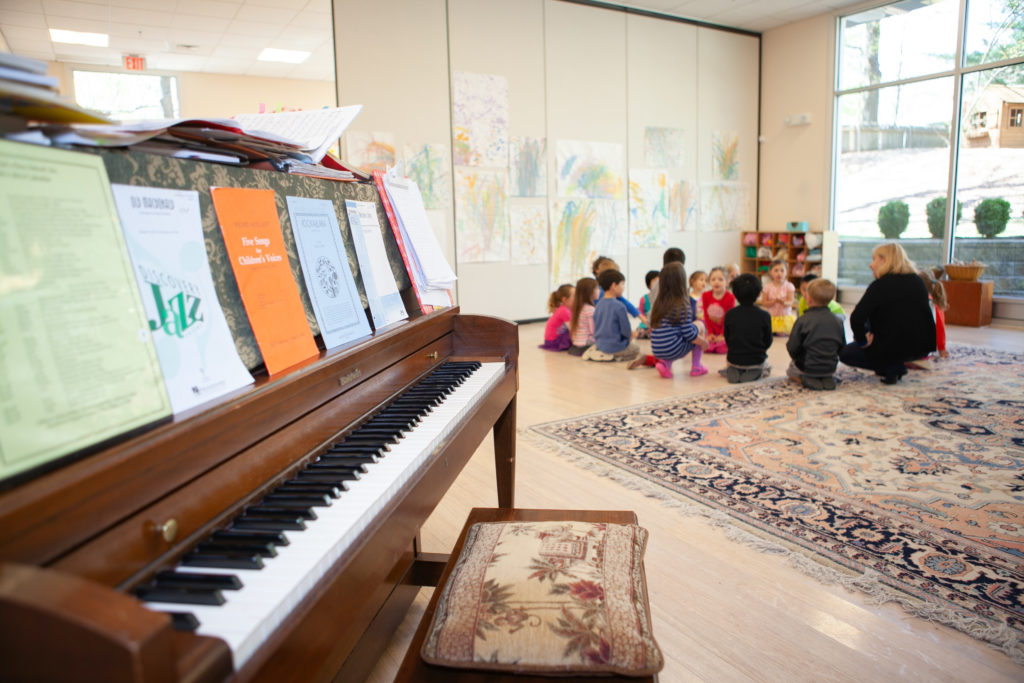
Singing, dancing, rhythm exercises, and creative movement are part of the classroom music experience. Kindergarteners participate in weekly music instruction led by an early childhood music instructor, which includes learning about rhythm, pitch, composition, and the musical scale. In addition, they work cooperatively to write a musical which is performed for the community on the last day of school.

Visual Art

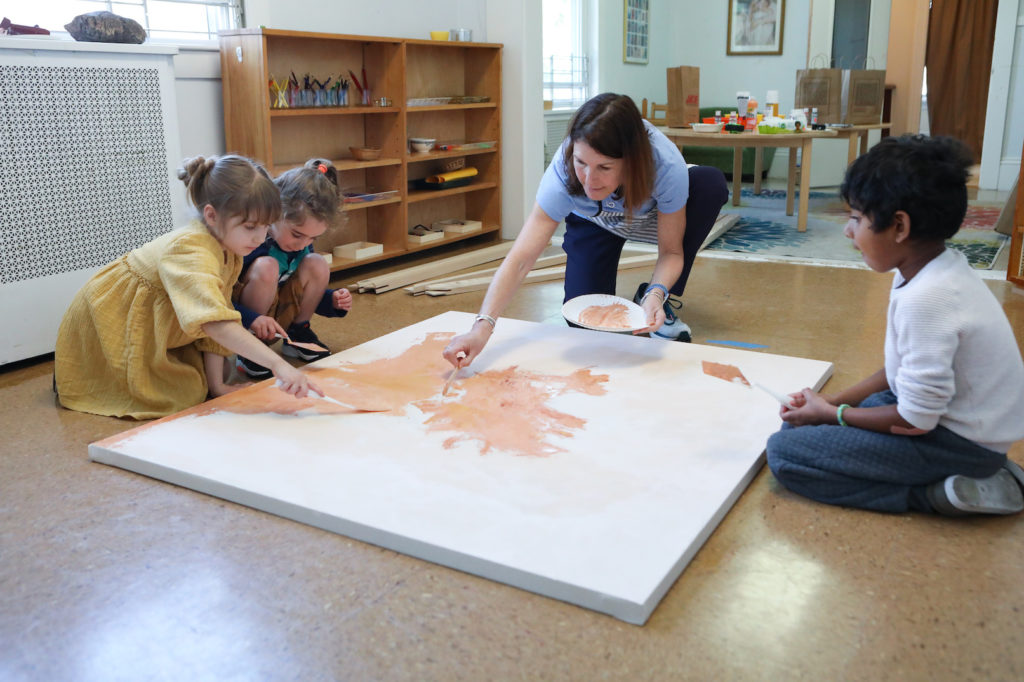
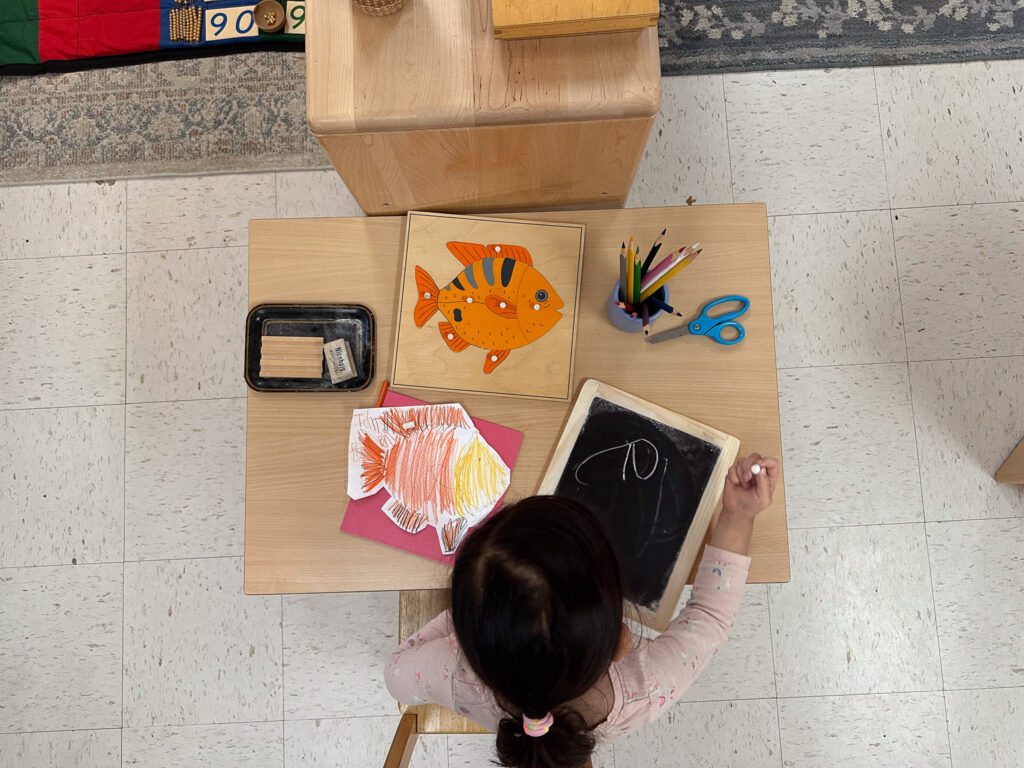
Children engage in daily art experiences in the classroom using paint, clay, collage and colored pencils. Our art teacher visits classrooms to provide an opportunity for children to explore using a variety of materials—sparking creativity and encouraging experimentation with a focus on process over product.